
BCBA Supervision: What You Need to Know Before You Start Your Hours
Classes are starting up again, and if you’re on the path to becoming a BCBA, now is the perfect time to get clear on supervision. The BACB requires supervised fieldwork, but the details can get confusing—restricted vs. unrestricted activities, 5% vs. 10% supervision, and how hours really add up. Let’s break it down in plain language.
Direct vs. Indirect Activities
Supervision is made up of direct and indirect activities.
Restricted Activities
are when you’re working with a client in real time—running programs, collecting data, or implementing behavior plans.
Unrestricted Activities
are activities that supports client progress but doesn’t involve face-to-face work. This includes graphing, data analysis, treatment planning, staff training, parent training, writing insurance reports, and professional development.
The BACB requires at least 60% of your fieldwork hours to be unrestricted. Why? Because BCBAs don’t just implement plans—they design, analyze, document, and make clinical decisions.
And here’s the key: these unrestricted skills aren’t taught in school. You don’t sit in class learning how to write an insurance report that will get approved, or how to train a group of staff to run a new protocol, or how to coach parents effectively. That’s what supervision is for—it bridges the gap between textbook definitions and the real-world responsibilities of a BCBA.
5% vs. 10% Supervision
You’ll see two supervision paths in the BACB Handbook: supervised fieldwork (5%) and concentrated supervised fieldwork (10%).
Supervised Fieldwork
= minimum 2,000 total hours
Concentrated supervised fieldwork
= minimum 1,500 total hours
The “2,000 Hours” Mindset
Even though the BCBA Handbook gives you two options, it helps to think of it this way: you need a total of 2,000 weighted hours.
Here’s the catch—your hours can fluctuate month to month. One month you may hit 5%, another month 10%. That’s okay. What matters is that by the end of supervision, your overall hours balance out to meet the requirements.
How to Calculate Weighted Hours
Always start by calculating your accrued hours, then multiply by the correct weighting factor:
5% supervision → accrued hours × 1.0
10% supervision → accrued hours × 1.33
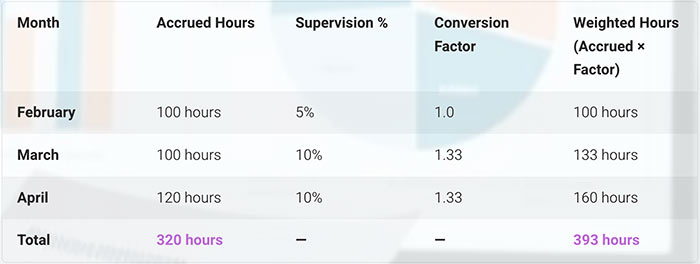
What This Means
Even though you accrued 320 hours, your supervision percentages boosted your progress to 393 weighted hours toward the BACB requirement of 2,000. This is why it’s so important to understand supervision types and plan ahead.
Final Thoughts
Supervision can feel overwhelming, but when you break it down, the path is flexible. Focus on building strong skills during both restricted and unrestricted activities, especially those you won’t get in school, such as insurance reporting, staff training, and parent training. These are the areas that truly prepare you for the field.
Ready to Start Your Supervision Journey?
If you’re looking for high-quality BCBA supervision that prepares you not only for the exam but also for the real work of being a behavior analyst, we would love to connect with you.
With BehaviorPREP supervision, you’ll get:
- Guided practice on unrestricted tasks
- Feedback that builds confidence in both direct and indirect skills
- A clear plan for tracking and meeting your BACB fieldwork requirements
Schedule a free consultation today and let’s make sure you don’t just finish your hours. Make sure you finish prepared.